Electrodomésticos integrados
We can supply and install the appliances. If you keep any, tell us the model so we can adjust the opening and ventilation.
Compare solid wood, wood veneer and textured melamine for your kitchen in Elche. Clear differences in material, finish and maintenance explained.
Includes a sketch with doors, windows and visible connections.
State which units, appliances or installations you wish to keep.
Tell us what you need, from measuring and design through to installation.
Photos of @mis.cocinas
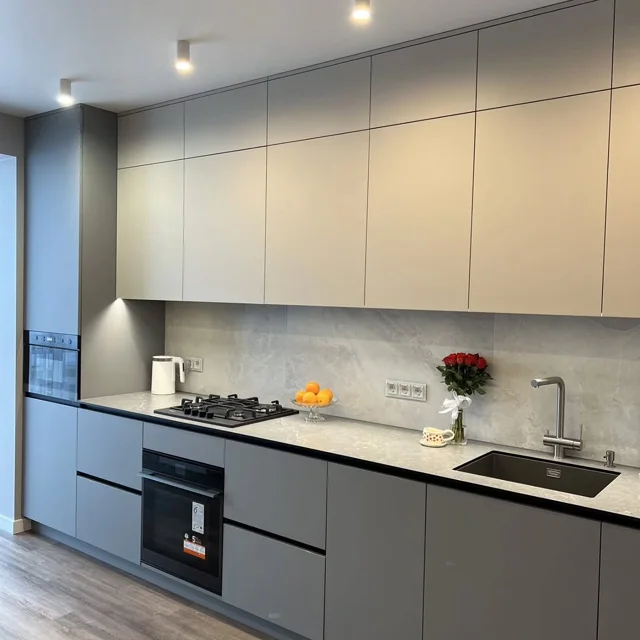
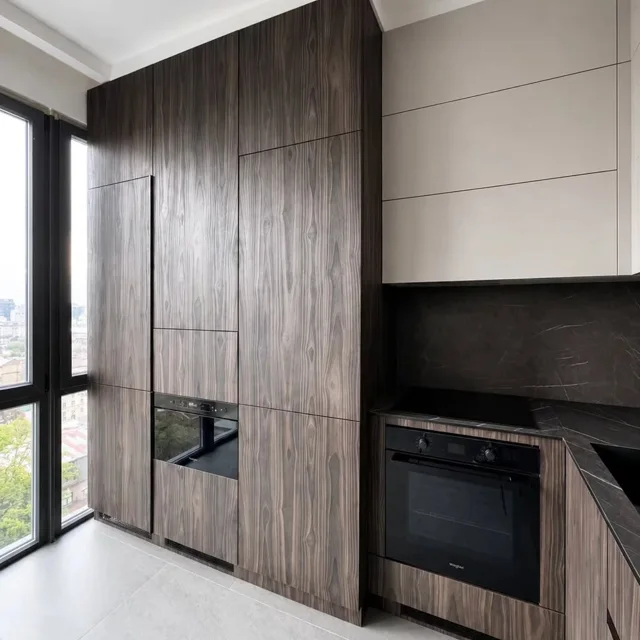
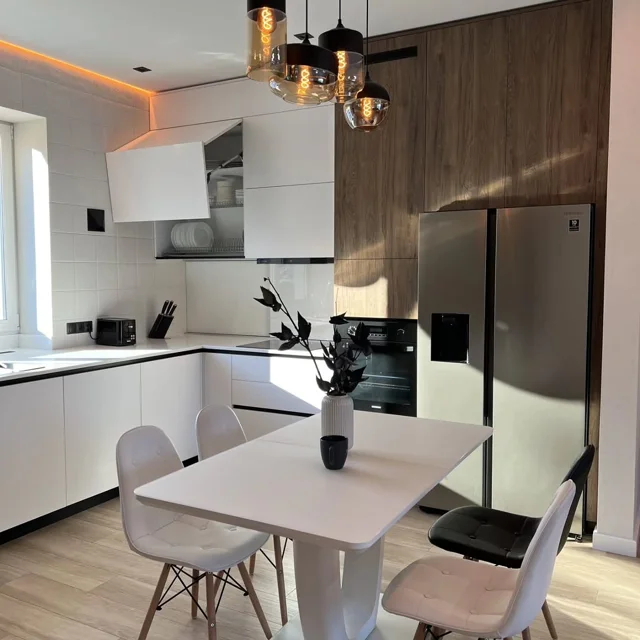
A modern made-to-measure kitchen starts with order: fewer things on view, more hidden storage and surfaces that are easy to clean.
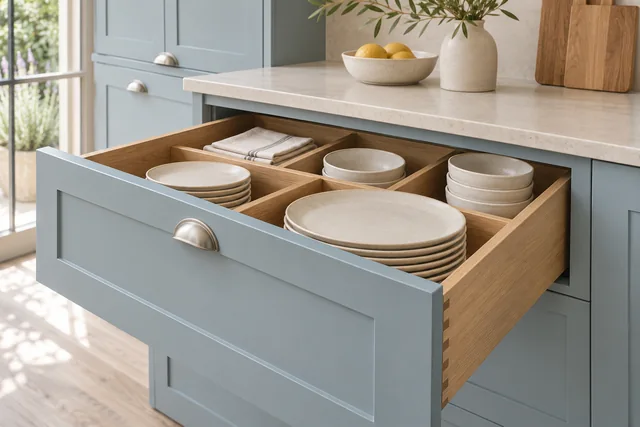
For pots and pans, a drawer that pulls out fully leaves the back in view. We choose the runners according to the weight you are going to store.
The dividers keep lids upright and plates in place when opening. We measure your largest items so we can leave them the space they need.
In an L-shaped kitchen, pull-out trays bring the contents of the corner closer to the door. We check that they can come out without hitting the handle of the adjoining unit.
Reserve the top shelf for platters and small appliances used occasionally. What you use daily stays on the shelves within easy reach.
We can supply and install the appliances. If you keep any, tell us the model so we can adjust the opening and ventilation.
Damp cloth and neutral soap, no scouring pads. Porcelain and quartz need no treatment. Check hinges and drawers from time to time.
Day 0
you approve the 3D design
Fabricación
After approving the design and finishes
Instalación
Depending on the agreed scope
Done
clean and connected kitchen
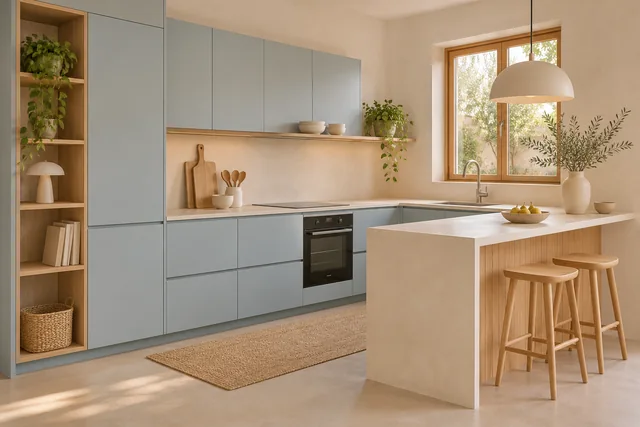
We work with the measurements of your space. The plan shows where to place the purchase, how to open the appliances and which passage remains free.
Tell us what you will store in each area. We can distribute crockery, pots and provisions between drawers, shelves and tall units.
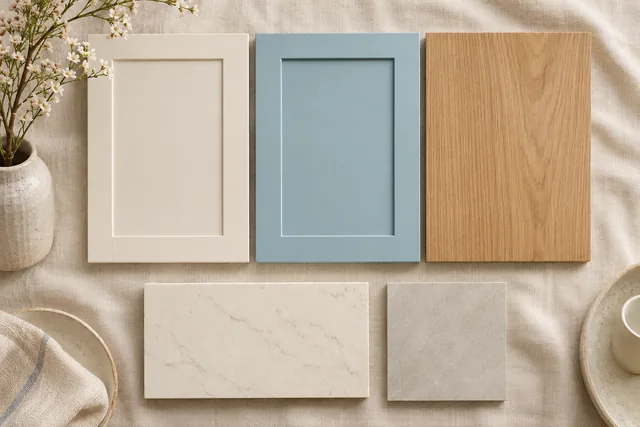
We propose finishes and mechanisms from Blum, Hettich or Salice depending on the opening you need. The quote identifies which reference goes into each unit.
We can assess the furniture with the appliances you already have, or quote the supply and installation of appliances. Indicate which ones you want to keep.
During a professional measuring visit, the exact dimensions of the space, the available height, the water, electricity and gas connection points, and the condition of the existing installations are reviewed. This review is the basis for deciding the layout, whether an island fits or a galley arrangement is better, and which wood material best suits those real conditions.
When an island is included, the overall layout changes, as does the circulation space needed around it and the installation requirements, which may involve moving existing water or electricity points. For this reason, an island is only viable if the space allows it after a prior professional measuring visit, not as an initial decision.
The commercial quote should clearly show the applicable VAT (IVA) and the cost of transport, without diluting them in other items. This information allows complete quotes to be compared between materials, since the final price including taxes and transport can change the decision between solid wood, wood veneer or textured melamine.
A galley kitchen is suitable when the available space is narrow and you want to make good use of the passage between two facing runs of units. This layout optimises the work route without needing to enlarge the area, provided the measuring visit confirms that the dimensions and existing installations allow it.
The layout is decided by taking into account the existing installations, such as the water, electricity and gas connection points, and their real limitations. Only after confirming what the space allows should you consider whether the finish will be solid wood, wood veneer or textured melamine for your kitchen in Elche.
In our standard range we combine Emuca hinges with Emuca or GTV drawer runners. We also work with Blum, Hettich and Salice to equip your kitchen with soft-close, full-extension drawers or lift-up doors. Your quote details the brand, model and finish of each fitting.





Select the municipality and project type to prepare your request.
Bespoke modern kitchens
If you are considering wooden kitchens in Elche, the first step is to understand which material you are actually looking at: solid wood, wood veneer and textured melamine are not the same, even though they can look alike at first glance. At MisCocinas we explain each option under its correct name so you can decide with real information, without surprises in appearance or maintenance. You can find out more about our work from the home page.
Solid wood is natural timber worked in a single piece, with no intermediate support. Its appearance, feel and behaviour are those of real wood: irregular grain, warmth to the touch and a change in colour over time that forms part of its character. This authenticity comes with trade-offs worth knowing before you decide. Solid wood reacts to changes in humidity and temperature, so it may move slightly with the seasons, and its maintenance usually requires more attention than other finishes: periodic treatments, care against knocks and specific cleaning so the surface is not damaged. It is also, in general, the highest-cost option among wooden kitchens.
Choosing solid wood makes sense when you genuinely want a natural material, in a single piece, and accept the higher cost and maintenance in exchange for authenticity. If your priority is a kitchen made entirely of wood, with no added layers or supports, this is the option that meets that requirement. You can read more about this and other finishes on our home page. Before you decide, we recommend arranging a professional measuring visit of your space: this will show you how this material behaves in your specific layout and what care it will require in the long term in your day-to-day life.
Consider whether you are prepared to take on the additional maintenance that solid wood requires in exchange for its authenticity. Book a professional measuring visit to check how this material would fit in your particular kitchen.
Wood veneer is a thin sheet of natural wood bonded onto a support, usually a board. The visual result is that of authentic wood, because the surface you see and touch is real timber, but the internal structure is not solid: it is a covered base. This makes it an intermediate option, combining a natural appearance with more stable behaviour against the humidity and temperature changes that affect solid wood. Maintenance is also usually somewhat simpler, although it is still a wood surface that should be cared for with suitable products. It is important not to confuse veneer with solid wood or with a decorative finish: it is natural wood, but not in a single piece. If you would like to see examples of this type of natural decorative surface applied to furniture, you can consult the reference on Finsa natural decorative surfaces (in Spanish), which illustrates well how this type of covering performs. Choosing wood veneer is suitable if you want the look and feel of natural wood but prefer a more stable structure and, in many cases, a more moderate cost than solid wood in a single piece.
Textured melamine is a decorative finish applied to a board base that imitates the grain or relief of wood through printing and surface texture. It is not wood, neither solid nor veneered: it is a decorative sheet designed to reproduce that effect visually, with simple maintenance and a contained cost. This distinction matters because, when explained properly, it allows you to choose with judgement: if what you are looking for is practicality, resistance to daily use and ease of cleaning, textured melamine meets that goal without needing to be presented as natural wood. Its behaviour against humidity and knocks is usually more predictable than that of real wood, precisely because it is not a natural material subject to movement. For those who prioritise a reliable decorative finish over the authenticity of the material, this option is a coherent choice. If you are interested in exploring this type of solution in more detail, our laminate kitchens section contains further information on finishes of this kind. The decision, in any case, should start by naming each material correctly: solid, veneer or textured melamine, without lumping the three concepts together under the generic label of "wood".
Before settling on the material or final finish, it is worth deciding the layout, because existing installations determine a large part of the real options. During a professional measuring visit, the dimensions of the space, the available height, the water, electricity and gas connection points, and the condition of the installations already in the home are reviewed. That information is what makes it possible to know which layouts are feasible without major works. A galley kitchen can be a suitable solution when the space is narrow and you want to make good use of the passage between two facing runs of units, optimising the work route without needing to enlarge the available area. If, on the other hand, you are considering an island, several factors change: the overall layout, the circulation space around it and the installation requirements, which may involve moving water or electricity points. For this reason, an island only makes sense if the space allows it after an actual measuring visit, not before. The layout should always be decided with the existing installations and their limitations in mind, and only then should you consider whether the finish will be solid wood, veneer or textured melamine. If your kitchen calls for a warm, traditional style, our rustic kitchens show how layout and materials of this kind are combined.
Choosing between solid wood, wood veneer or textured melamine has a direct consequence on the final budget, and this information should be clearly set out in any commercial quote. Specifically, the applicable VAT (IVA) and the cost of transport should appear explicitly, without being left implicit or diluted within other items, so that the comparison between options is realistic from the outset. Comparing materials only makes sense if complete quotes are compared: assessing the price of the units on their own is not the same as the final cost including taxes and transport, because that difference can alter the decision between solid wood, veneer or textured melamine. To get an idea of general ranges and conditions before requesting a measuring visit, you can consult our page on kitchen pricing, which explains the factors that influence the final cost. Booking a professional measuring visit of your space is the step that takes you from an indicative range to a proposal tailored to your specific kitchen, with the material, layout and economic conditions set out transparently.