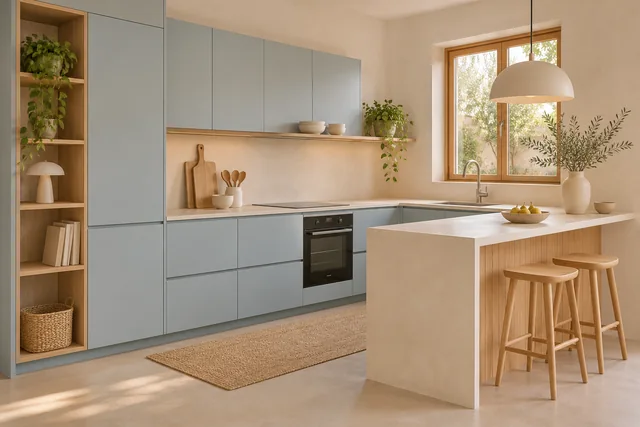
Draw the floor plan
We work with the measurements of your space. The plan shows where to place the purchase, how to open the appliances and which passage remains free.
Bespoke kitchens in Matola, Elche: design, kitchen units and installation for a confirmed address. Plan your project before requesting a quote.
Includes a sketch with doors, windows and visible connections.
State which units, appliances or installations you wish to keep.
Tell us what you need, from measuring and design through to installation.
Photos of @mis.cocinas
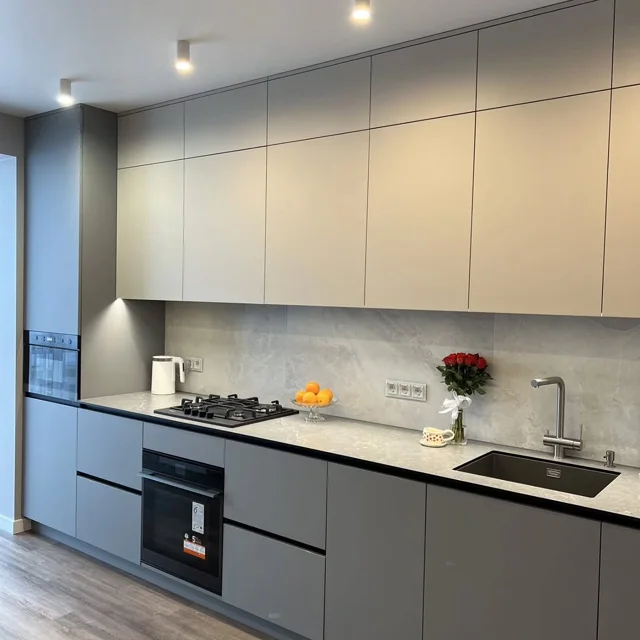
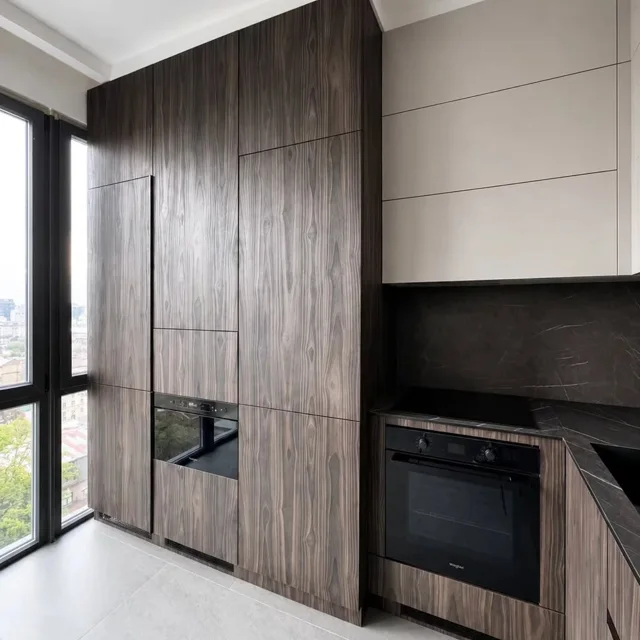
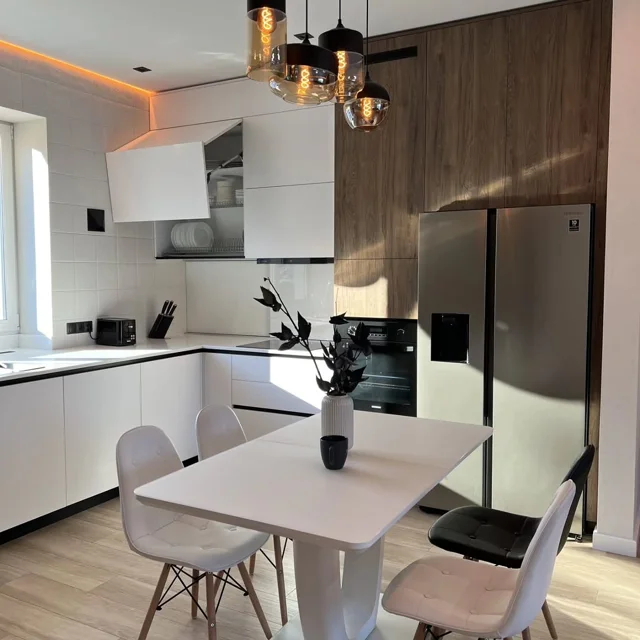
Select the municipality and project type to prepare your request.
Up to 3 days
until the visit
From 1 week
design and quote
3–4 weeks
fabricación
1–2 days
montaje
We work with the measurements of your space. The plan shows where to place the purchase, how to open the appliances and which passage remains free.
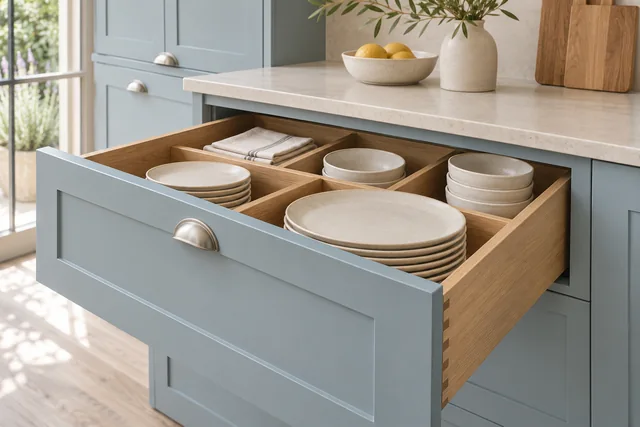
Tell us what you will store in each area. We can distribute crockery, pots and provisions between drawers, shelves and tall units.
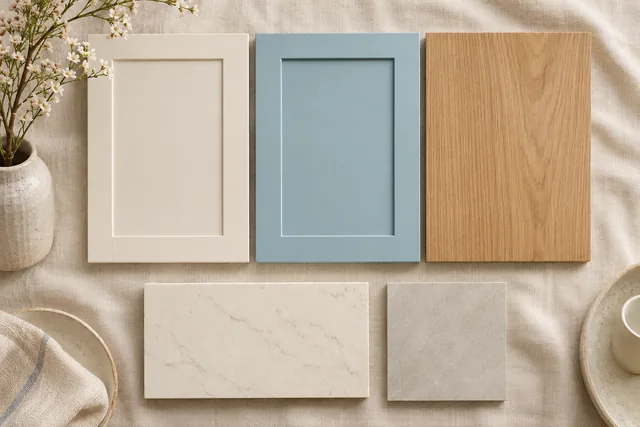
We propose finishes and mechanisms from Blum, Hettich or Salice depending on the opening you need. The quote identifies which reference goes into each unit.
We can assess the furniture with the appliances you already have, or quote the supply and installation of appliances. Indicate which ones you want to keep.
The basic measurements include the width, length and height of the available space, the location of windows and doors, and the position of the water, gas and electrical connections. This information allows a first indicative estimate to be prepared before a final quote is drawn up based on exact measurements.
The recommended step is to request availability directly by confirming the exact address in Matola, Elche, together with the initial dimensions of the space. This information allows manufacturing and installation timescales to be reviewed for your specific case, without assuming general coverage or generic timings.
The indicative estimate is based on initial information and helps decide whether the project goes ahead. The final quote comes later, once exact measurements and the plan have been reviewed, and includes specific materials, fittings and appliances with the real cost of carrying out the work.
A fixed module offers stability and connections designed for a permanent location. A removable peninsula offers flexibility to be relocated, but it requires checking beforehand whether the service connections allow that movement without additional building work in the home.
In our standard range we combine Emuca hinges with Emuca or GTV drawer runners. We also work with Blum, Hettich and Salice to equip your kitchen with soft-close, full-extension drawers or lift-up doors. Your quote details the brand, model and finish of each fitting.





Kitchens in Torrellano
If you are considering a bespoke kitchen in Matola (Elche), the first step is to confirm the exact address where it will be installed and to be clear about the dimensions of the space. At MisCocinas we work with a hypothetical scenario to guide you: comparing a removable peninsula with a fixed module, and understanding to what extent the appliances and connections already in the home can be reused. This page helps you make concrete decisions before requesting an indicative estimate.
When the priority is a layout that will not change over time, a fixed module is usually the most sensible option for your kitchen. Consider a typical case: a home in Matola where the available space is well defined and no further refurbishment is planned in the short or medium term. In this type of scenario, choosing a fixed module considerably reduces the number of pieces that would need to be dismantled, moved or replaced in the future, which noticeably simplifies the day-to-day maintenance of the kitchen.
The reason is straightforward: each element of the furniture occupies a stable and permanent position from the outset, so the water, gas and electrical connections are installed with that final location in mind, with no need to allow for future changes to the layout. This not only provides technical peace of mind, but also makes cleaning, inspection and repair easier, as technicians know exactly where to find each connection point without altering the original structure. In fact, many clients value this option precisely because it avoids surprises during installation and reduces later technical visits, as the furniture does not have to be reconfigured every time a fault arises.
In addition, as this is a stable solution, a fixed module usually requires fewer later adjustments, which saves time and costs over the medium term. This stability is particularly useful in kitchens where daily use is intensive and where any moving part could lead to premature wear or frequent maintenance.
In our bespoke kitchen service we apply this philosophy from the very first sketch, fitting each fixed module to the exact dimensions of the space available in Matola, so that the final result combines functionality, durability and an aesthetic that matches the rest of the home. In this way, each kitchen becomes a lasting investment, designed to support everyday life in the home for many years without problems or unnecessary interventions.
This does not mean that a fixed module is always the best choice, but rather that it is worth choosing when stability matters more than flexibility. If your home in Elche has a clear structure and you do not expect any changes to the layout, this approach allows you to focus on the kitchen units and the final finish without complicating the installation with additional moving parts.
A removable peninsula meets a different need: the ability to relocate the unit if the space changes or if you need to free up that area at some point. In our hypothetical scenario, this means carefully checking how the service connections are laid out, because a peninsula that can be moved does not always have the same ease of connection in a new position.
This option makes sense if you value flexibility over stability, but you should bear in mind that the water or electrical connection will need to be checked before any change of location. It is not a decision to be taken lightly: it requires first checking whether the existing installations allow that movement without additional building work. For this reason, before deciding, we recommend consulting the section on kitchen design to understand what each alternative involves in your particular case.
One of the points that causes the most questions is whether the appliances you already have can be reused. The answer depends on three factors that need to be verified before going ahead: the exact size of the appliance, its condition and its compatibility with the new layout and the connections available in the home.
It is not enough for an oven or a fridge to fit visually into the planned space; you also need to check that the electrical or gas connections match the final location of the unit. In our hypothetical scenario for Matola, this means that before confirming the design, it is advisable to measure each appliance precisely and note its condition, to avoid surprises once installation has started. This preliminary check is the basis for deciding whether the quote includes new appliances or makes use of the existing ones.
The usual process begins with an indicative estimate, which helps decide the overall scope of the project without needing every detail to be finalised. This first approximation is based on the basic dimensions and the type of layout you are considering, whether a fixed module or a removable peninsula.
Once the measurements and the plan of the space have been reviewed, it is possible to move on to a final quote, which includes the specific details of materials, fittings and appliances. The difference between the two documents is clear: the indicative estimate helps you decide whether to go ahead, while the final quote reflects the real cost of the project as it will be carried out. You can find out how this process is structured in the section on kitchen pricing before taking the next step.
Before confirming the type of unit and the intended use of each module, there is no point in finalising the fittings or drawer systems. This decision is deliberately postponed because it depends directly on how each space will be used: a drawer intended for heavy pans does not need the same system as one for light utensils.
An example of a runner system often considered in this type of project is the Movento system from Blum (in Spanish), which illustrates how performance varies according to the intended use. In our hypothetical scenario for Matola, we recommend first confirming whether the unit will be fixed or removable, and only then defining the fittings, in order to avoid changes that increase the cost of the project once manufacturing has begun.